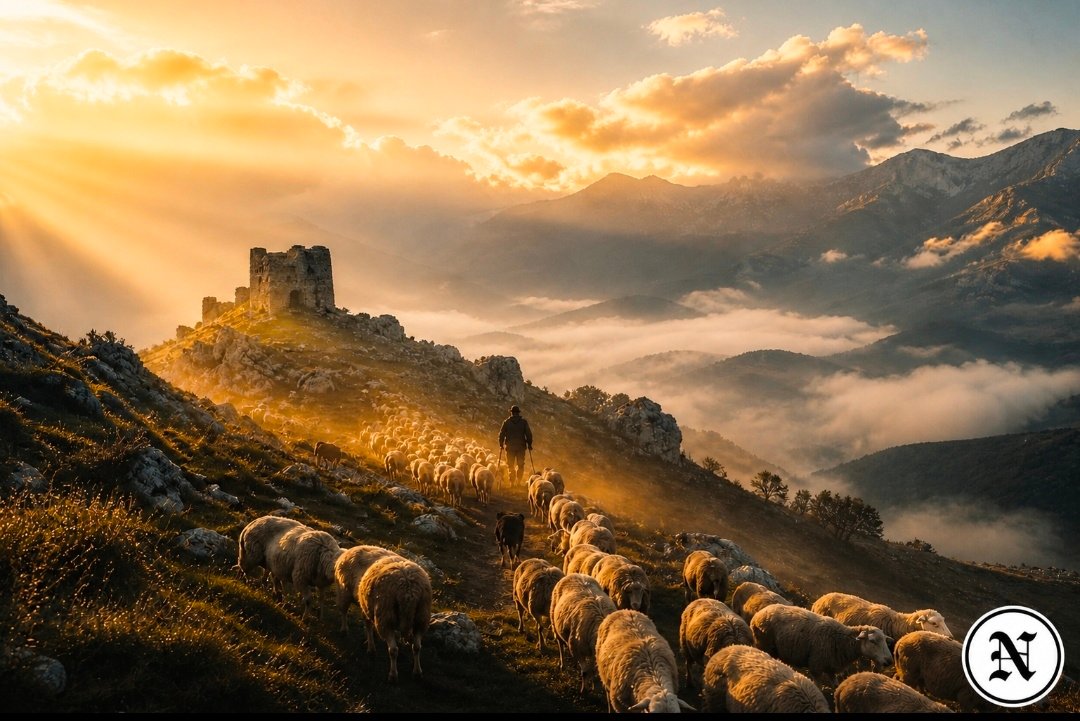
A deep dive into the meaning, origins, emotional science, and cultural significance of a word that quietly describes some of the most powerful human experiences.
Imagine you have been carrying something heavy for months. Not a physical weight, but one of those invisible burdens — grief, frustration, longing, or the slow exhaustion of a life moving too fast. Then one evening, without warning, it breaks open. Tears, laughter, shaking, silence. Something shifts. You feel — impossibly, unexpectedly — lighter.
In most languages, we have no single word for that experience. We reach for phrases: “emotional release,” “breaking point,” “letting it all out.” None of them quite land. The Italian countryside, however, may have a word for it. That word is simbramento.
Right now, in 2026, simbramento is quietly escaping the niche corners of linguistic philosophy and entering broader cultural conversation. Writers are using it. Psychologists are finding it useful. Communities discussing human connection online are latching on to it. And yet, most people still cannot find it in a standard dictionary. This guide fixes that. By the end, you will not only understand what simbramento means — you will recognize the dozens of moments in your own life where you have already lived it.
What You Will Discover in This Guide
The full dual meaning of simbramento — its ancient rural roots and its modern emotional interpretation. The Romance-language origins that give it a poetic, living quality. How psychology, art, and neuroscience all point to the same phenomenon. Why this word is gaining momentum in 2026. And how to apply it practically in your own life, work, and relationships.
READ MORE: Raussan Explained: Meaning, Origin, Uses, Benefits, and Why It Matters Today
What Does Simbramento Actually Mean? The Dual Definition That Changes Everything
Here is the honest answer: simbramento carries two meanings that, at first glance, seem unrelated. Once you understand both, you realize they are two faces of the same truth.
Simbramento
/sim·bra·MEN·to/ — noun, likely Romance-language origin
1. (Historical/Rural): The seasonal movement of people and animals between lowland and highland pastures, timed to nature’s rhythms — a physical act of transition and collective renewal.
2. (Emotional/Psychological): A sudden, involuntary release of emotion after a sustained period of internal buildup — the moment the body and mind decide they can no longer stay silent.
What binds these two meanings together is a single, elegant principle: buildup followed by release. Whether it is a village moving its livestock from the valleys to the mountain pastures after a long winter, or a person finally crying in the car after months of holding it together — both are simbramento. Both are moments of necessary transition that restore balance.
This is not a metaphor. It is the same structural truth expressed at two different scales of human life.
“Simbramento is not just about being together. It is about feeling connected in a meaningful way — the moment when separate parts become one.”
The Origins of the Word: Does Simbramento Have Ancient Roots?
Here is what nobody tells you about the linguistic history of simbramento: the debate about its origins is itself revealing. The word does not appear in most modern dictionaries. It does not have a clean, timestamped etymology you can trace to a single source. And that ambiguity, as it turns out, is a feature, not a bug.
The structure of the word strongly suggests Romance-language origins — Italian or Spanish being the most plausible candidates. Breaking it down:
- “Sim” or “Sim-“ — likely derived from “similis” (Latin for “similar” or “alike”), or from “simbiosi” (symbiosis, meaning co-dependence and mutual living).
- “Bra” or “-bram-“ — potentially from “braço” (Portuguese/Spanish for “arm”), or from “bramido” (a roar, shout, or cry). This syllable adds force and movement.
- “-mento” — a standard Romance-language suffix indicating an ongoing process. Think “sentimento” (feeling), “movimento” (movement), “momento” (moment). It makes the word active, unfolding, alive.
Put together, simbramento sounds like “a shared cry,” “a process of coming together with force,” or “a movement toward likeness.” Each interpretation fits its usage perfectly. The “-mento” suffix is particularly important: it signals that simbramento is not a state but a process. You do not simply have simbramento. You experience it. It happens to you.
A Living Word in a Time That Needs Living Words
Some linguists argue that simbramento is a neologism — a newly coined word shaped by online communities, writers, and people searching for language that matches complex inner experiences. Others believe it has older, oral-tradition roots in southern Italy. My honest view? It does not matter which story is precisely correct. What matters is that the experience it describes is real, documented, and universal. The word arrived because something needed naming.
The Historical Context: Simbramento on the Ancient Pastoral Routes of Southern Italy
Before simbramento became an emotional concept, it described something you could see with your own eyes. Picture the Apennine mountains of central Italy — Abruzzo, Molise, Lazio, Tuscany. For centuries, the farming communities of these regions survived through a practice called transhumance: the seasonal movement of livestock between lowland winter pastures and highland summer grazing grounds.
This was not a casual stroll. These were organized, communal migrations — sometimes involving hundreds of animals, entire families, and journeys spanning days. The routes, called tratturi, were ancient highways carved by centuries of hooves and boots. Moving too early meant exposing animals to cold. Moving too late meant missing prime grazing. Timing, cooperation, and community were everything.
In this context, simbramento was not just a logistical event. It was a cultural ritual. Communities would bless animals before departure. Traditional songs were sung along the journey. Wool clothing was worn as both protection and identity. The movement marked the turning of seasons and the continuation of life. Arrivals were celebrated. Departures were honored.
The Four Pillars of Historical Simbramento
1. Timing — knowing exactly when to move, neither too early nor too late.
2. Community — the movement required collective effort and shared knowledge across generations.
3. Trust in cycles — accepting that leaving one place is not loss, and arriving somewhere new is not escape. Both are part of the same flow.
4. Ritual — marking the transition with music, food, blessings, and shared presence.
What is remarkable is how closely these four pillars mirror the emotional version of simbramento. When we experience emotional simbramento — that sudden, cathartic release — we also need timing, community, trust in cycles, and some form of ritual (a conversation, a walk, a piece of music) to make sense of what just happened.
Emotional Simbramento: The Psychology and Neuroscience Behind the Release
Here is where the concept gets genuinely fascinating — and where modern science catches up to an ancient word.
Emotional simbramento describes what psychologists call “cathartic release” or “emotional flooding.” But those clinical terms miss something important. Cathartic release sounds like therapy-speak. Simbramento sounds like something that happens to a real person on a real Tuesday afternoon.
What Is Actually Happening in the Brain During Simbramento?
When emotions are suppressed over a long period — because circumstances demand it, because vulnerability feels unsafe, or because we simply do not have the language to process what we feel — the body’s stress response systems remain chronically activated. Cortisol levels stay elevated. The amygdala stays alert. The prefrontal cortex, responsible for emotional regulation, works overtime to keep the lid on.
Then something small happens. A song. A smell. A kind sentence from a friend. And the lid comes off. What follows is not weakness. It is a neurologically necessary recalibration. The body releases stored tension through tears, laughter, trembling, or sudden and surprising stillness. Research in somatic psychology suggests these releases serve a genuine physiological function: they complete what the nervous system started but could not finish during the original stressful experience.
In other words, simbramento is not dysfunction. It is the body’s intelligence, finally finding an opening.
| Type of Simbramento | Common Triggers | Physical Signs | What It Restores |
|---|---|---|---|
| Grief-based | A memory, a song, a scent | Sudden tears, tightness in chest | Processing of loss |
| Joy-based | An unexpected reunion, milestone | Laughter, shaking, overwhelm | Permission to feel good |
| Frustration-based | A final straw after long tension | Tears, voice breaking | Boundary clarity |
| Relief-based | Resolution of long uncertainty | Deep exhale, stillness | Nervous system reset |
| Collective | Shared grief or shared triumph | Group tears, unplanned silence | Communal bonding |
Simbramento as a Concept of Human Connection and Collective Alignment
Several researchers and writers have extended the meaning of simbramento beyond individual emotional release toward something larger: collective human alignment. This is where the word begins to feel genuinely new, and genuinely necessary.
Think about what happens in a stadium when a last-minute goal is scored. Every person in that crowd experiences the same moment of release — joy, disbelief, release — simultaneously and involuntarily. Or consider a public memorial after a tragedy, when strangers stand in shared silence and feel, without planning it, the same grief. Or a wedding reception when a first dance unexpectedly moves an entire room to tears.
These are moments of collective simbramento. They are not planned.They cannot be manufactured.They happen when conditions align: shared investment, accumulated emotion, and a single triggering moment. Communities that experience collective simbramento regularly report stronger social trust, greater resilience in crisis, and a deeper sense of belonging.
“In a world that often feels fast and divided, simbramento reminds us of something important: meaning grows when people and ideas come together.”
Simbramento in Art, Literature, and Creative Work
Artists have described simbramento without naming it for centuries. The scene in a novel where a character finally breaks down after holding everything together for 300 pages. The musical passage that builds and builds until release becomes inevitable. The painting that captures a moment of transition — not the beginning, not the end, but the precise instant of change.
In creative writing, simbramento serves as a structural principle: the buildup of tension followed by cathartic release.In music, it describes the dynamic arc from pianissimo to fortissimo, or the moment in a blues song when the vocal finally breaks.In visual art, it captures the charged moment between stillness and motion.
Writers and Creatives Who Have Lived This Without the Word
James Baldwin wrote extensively about the experience of emotional suppression and its eventual, necessary overflow — particularly in the context of racial trauma and communal grief. His work is a sustained meditation on what simbramento feels like when it is collective and politically charged. Toni Morrison’s novels frequently reach their emotional apex at moments of sudden, unplanned release — funerals that become celebrations, confessions that arrive without warning.
Having a name for this dynamic does not make great art more explainable. But it gives writers, directors, and musicians a cleaner target to aim for. You are not just building toward “an emotional moment.” You are engineering simbramento.
Simbramento and Modern Society: Why This Word Is Gaining Attention in 2026
Here is my honest opinion about why simbramento is suddenly circulating widely: we are living through a simbramento deficit at scale.
The past several years have involved an unusual concentration of unprocessed collective stress. Pandemic isolation. Political fracture. Economic anxiety. The pace of information, the collapse of shared public rituals, the atomization of community life — all of this has produced a culture-wide buildup without adequate release. People are carrying more than usual, and the outlets we used to rely on (communal gathering, shared grief rituals, public celebration) have become inconsistent or inaccessible.
Into this context, the word simbramento arrives with something useful: a framework. It tells us that what we are feeling — this sense of pressure building, of emotions without containers, of something needing to break open — is not pathological.It is cyclical. It has always happened. And it resolves. The pastoral communities of southern Italy knew this. The question is whether modern life has preserved the conditions that allow the release to happen.
Practical Ways to Cultivate Simbramento in Your Own Life
- Create regular transition rituals. The historical version of simbramento was marked by seasons and movement. You can build smaller versions: weekly reflections, monthly check-ins with yourself, seasonal rituals that mark change rather than ignore it.
- Stop treating emotional release as failure. Crying at a film, laughing until you shake, feeling overwhelmed at unexpected beauty — these are not weaknesses. They are the nervous system completing its work. Let them happen.
- Invest in shared experiences with others. Collective simbramento requires proximity and investment. Concerts, communal meals, sports watched together, funerals attended in person — these are the conditions in which communal release becomes possible.
- Name what has been building. Often, simbramento is delayed simply because we have not given language to what we are carrying. Journaling, therapy, honest conversations with trusted people — any practice that helps name accumulated emotion makes the eventual release more natural and less disruptive.
- Trust the cycle. The pastoral communities of Abruzzo understood that leaving a place was not the same as losing it. Modern life asks us to trust the same thing: that transition is not catastrophe. Change, even painful change, is part of the same flow that includes return, renewal, and rest.
Is Simbramento a “Real” Word — and Does That Question Even Matter?
This is the question most people want answered, and I will give you a direct response: whether or not simbramento appears in a formal dictionary is significantly less important than whether it describes a real phenomenon accurately. It does.
Language has always grown through use before recognition. Words like “serendipity,” “nerd,” “chortle,” and even “quiz” were invented or popularized before any dictionary ratified them. They stuck because they named something that needed naming. Simbramento is in that category. The experience it describes — buildup, transition, and release, whether physical or emotional or communal — is universal, documented, and consequential.
What is interesting is that simbramento also exists at an intersection with transhumance — a practice that UNESCO recognized in 2019 as part of the Intangible Cultural Heritage of Humanity. The cultural traditions surrounding seasonal migration in the Mediterranean and Alpine regions are well-documented. Simbramento may be a living part of that oral tradition, not yet captured by formal lexicographers, but real in every sense that matters.
READ MORE: The Braves Marcell Ozuna Waiver Candidate Story: What Really Happened and Why It Matters
Conclusion: What Simbramento Teaches Us About Being Human
We began with a simple question: what is simbramento? We end with something richer. Simbramento is the word for the moment when what has been building — in a body, in a community, in a culture — finally finds its way through. It is the seasonal migration of human experience: the necessary movement from one state to another, timed by cycles rather than clocks, marked by ritual rather than efficiency.
It is the shepherd moving his flock across an ancient route in Abruzzo, reading the weather and trusting the path his grandfather walked. And it is the person in the car, on an ordinary afternoon, finally letting the tears come after a year of holding on.
Both of them are experiencing the same truth. Nothing that builds indefinitely stays contained forever. And when the release comes, it is not a failure of control. It is a restoration of balance. That is simbramento. And now that you have a word for it, you will notice it everywhere — in yourself, in the people around you, and in the movements of the larger world.
The real question, then, is not whether simbramento is a word. It is this: what are you holding right now that might be ready to move?
Frequently Asked Questions About Simbramento
What is the simplest definition of simbramento?
Simbramento refers to a process of buildup followed by necessary release — either the seasonal migration of people and animals in rural Southern European tradition, or the sudden emotional release that follows a long period of internal suppression. At its core, it describes any transition that restores balance after an accumulation of pressure.
Is simbramento an Italian word?
Its structure strongly suggests Romance-language origins — most likely Italian or Portuguese. The suffix “-mento” is characteristic of Italian and indicates an ongoing process. Historical usage appears most often in connection with rural communities in central and southern Italy, including Abruzzo, Molise, and Lazio, where seasonal livestock migration was a central part of agricultural life.
How is simbramento different from catharsis?
Catharsis, from Greek tragedy theory, describes purification through art. Simbramento is broader and more embodied: it includes communal physical movement, natural cycles, and involuntary emotional overflow in everyday life — not just through theatrical experience. Catharsis happens to an audience. Simbramento happens to a person, a community, or a culture moving through a natural cycle.
Can simbramento be a collective experience?
Absolutely — and some researchers argue collective simbramento is its most powerful form. Shared grief at a memorial, the simultaneous eruption of joy in a sports stadium, or the unexpected emotional wave that moves through a wedding reception are all examples. Collective simbramento strengthens social bonds and creates the experience of genuine community that many modern environments struggle to produce.
Why is simbramento gaining attention in 2026?
Several converging factors: widespread awareness of collective stress from recent years, growing interest in emotional vocabulary and emotional intelligence, and an online culture increasingly interested in untranslatable words that describe complex inner experiences. The word fills a genuine linguistic gap at a moment when many people feel they are carrying more than language usually allows them to name.
How can I apply the concept of simbramento practically?
Start by building transition rituals into your daily or weekly life. Recognize that emotional accumulation is normal — and that its release, when it comes, is healthy rather than alarming. Seek out shared experiences that create conditions for collective release: live music, communal meals, group exercise, storytelling. And practice naming what you carry, which is often the first step toward natural simbramento.
This article draws on cultural linguistics, somatic psychology research, and historical records of Mediterranean pastoral traditions.
For further reading on emotional vocabulary and untranslatable concepts, explore the broader literature on linguistic relativity and cultural emotion research.
READ MORE: https://newsobuzz.com/