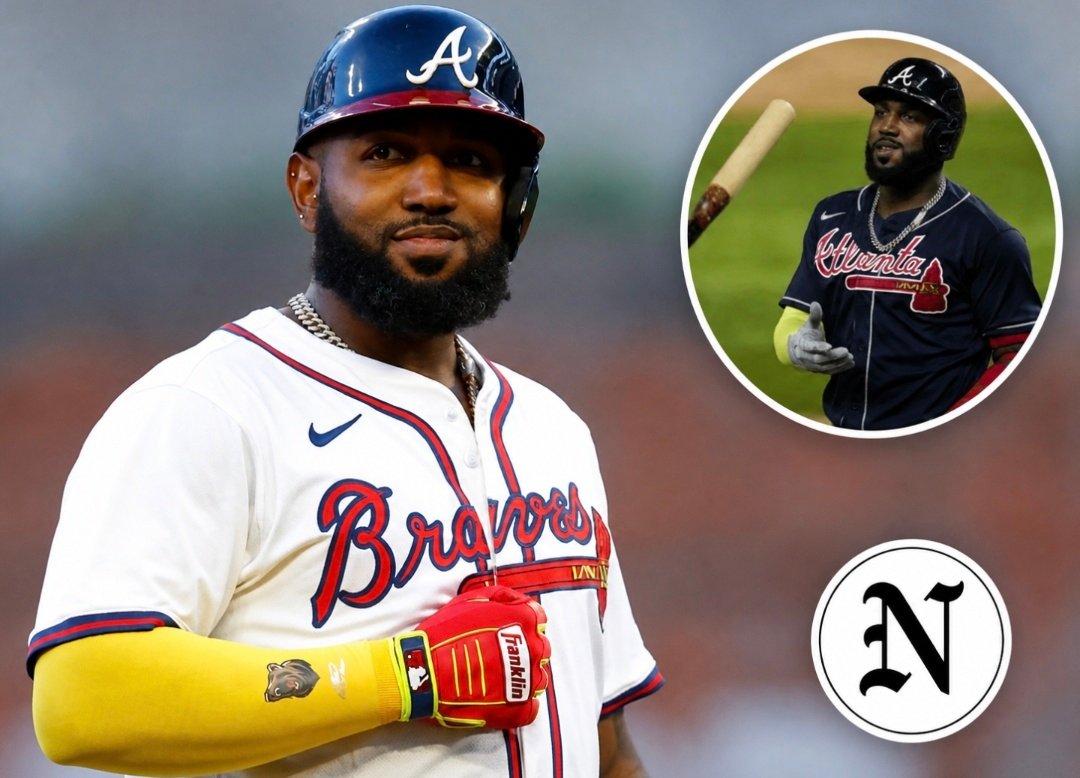
The sports media cycle moves fast — sometimes too fast. In the summer and fall of 2025, one phrase echoed across Atlanta sports radio, Reddit threads, and MLB fan forums with surprising frequency: Braves Marcell Ozuna waiver candidate. It triggered a wave of debate, anxiety, and speculation that consumed the Braves fanbase for months.
Here is the part most people missed: Ozuna was never waived. Not once.
What unfolded was a masterclass in how modern baseball media creates narratives — and how those narratives, whether accurate or not, shape how fans, analysts, and front offices interact with the game. Understanding the real story requires going deeper than the headlines. It requires looking at performance data, contract mechanics, roster strategy, and the genuine human element of a veteran slugger navigating the final chapter of his time with one of baseball’s elite organizations.
Quick Bio- braves marcell ozuna waiver candidate
| Category | Details |
|---|---|
| Full Name | Marcell Ozuna Idelfonso |
| Nickname | The Big Bear |
| Date of Birth | November 12, 1990 |
| Age | 35 years old (as of 2026) |
| Birthplace | Santo Domingo, Dominican Republic |
| Nationality | Dominican |
| Ethnicity | Afro-Dominican |
| Height | 6 ft 1 in (1.85 m) |
| Weight | 225 lbs / 99.8 kg |
| Bats / Throws | Right / Right |
| Position | Designated Hitter (DH) / Outfielder |
| Current Team | Pittsburgh Pirates (2026) |
| MLB Debut | April 30, 2013 (Miami Marlins) |
| Signing Bonus | $49,000 (signed by Marlins, Feb 15, 2008) |
| Father | Former painter (name not publicly disclosed) |
| Mother | Housekeeper (name not publicly disclosed) |
| Siblings | 1 brother, 2 sisters |
| Famous Relative | Pablo Ozuna — former MLB player (cousin) |
| Wife | Genesis Guzman (Dominican model & actress) |
| Wife’s DOB | November 28, 1995 |
| Married | 2016 (private ceremony) |
| Children | 3 — Marcell Jr. (b. 2017), Sofia Valentina (b. 2019), and one more |
| Education | Local school in Santo Domingo; left early to pursue baseball career |
| Religion | Christian |
| Hobbies | Fishing, spending time with family during off-season |
| Signature Style | Neon yellow compression sleeve — his on-field trademark |
| Social Media | Active on Instagram — shares family & career updates |
| Teams Played For | Miami Marlins (2013–17) → St. Louis Cardinals (2018–19) → Atlanta Braves (2020–25) → Pittsburgh Pirates (2026–) |
| MLB All-Star | 3× (2016, 2017, 2024) |
| Silver Slugger Award | 2× (2017, 2020) |
| Gold Glove Award | 1× (2017) |
| NL HR & RBI Leader | 2020 (led National League in both) |
| Best Season (Stats) | 2023 — .302 AVG / 39 HR / 104 RBI / 148 wRC+ |
| Career Home Runs | 250+ (active, as of 2026) |
| Career RBIs | 900+ (active, as of 2026) |
| Career Hits | 1,500+ (milestone reached in 2024) |
| Notable Record | First NL player to hit 3 HRs in a game at Fenway Park (2020) |
| NL MVP Voting | 4th place finish (2023) |
| Home Run Derby | Participated in 2024 All-Star Derby |
| Braves Contract | 4 years / $65 million (signed March 2022, $16.25M AAV) |
| Pirates Contract | 1 year / $12 million (Feb 2026) + $16M mutual option for 2027 |
| Total Career Earnings | Estimated $96+ million (MLB salaries) |
| Net Worth | Estimated $25–35 million (as of 2025–26) |
| Endorsements | Pepsi, Aquafina (reported) |
| Philanthropy | Charitable work in Dominican Republic |
| 2025 Season Stats | .232 AVG / .355 OBP / .400 SLG / 21 HR / 68 RBI / .741 OPS |
| Controversy | 2021 domestic violence arrest — charges later dropped; served 20-game MLB suspension |
| Pronunciation | oh-ZOO-nah |
Let me break it all down.
What Does “Waiver Candidate” Actually Mean in MLB?
Before dissecting Ozuna’s situation, it helps to understand the language being thrown around.A waiver candidate is not a player who has been placed on waivers.It is a player that analysts or reporters believe could be placed on waivers based on performance concerns, contract weight, or roster construction logic.
READ MORE: Who Is Melissa Spalding? The Woman Behind Paul Hollywood’s Quiet Life
In Major League Baseball, outright waivers allow any team to claim a player still under contract. The claiming team, ranked by reverse order of standings, assumes that player’s full remaining contract. This is a significant risk for the claiming franchise, which is precisely why expensive veterans rarely get claimed even when placed on waivers.
The financial reality matters here. Atlanta’s payroll sat close to the competitive balance tax threshold — projected at roughly $244 million for 2026, with the team estimated near $233 million including Ozuna’s deal. Even if the Braves had placed Ozuna on waivers, they would still owe the full remaining salary unless another team claimed him. The luxury tax calculation treats released player salaries as active payroll regardless. So the financial incentive for using waivers was essentially zero.
This is why Atlanta’s front office — one of the sharpest in baseball under Alex Anthopoulos — was never seriously pursuing this route. The waiver narrative was built by observers, not by the organization.
Ozuna’s 2025 Season: A Down Year, Not a Collapse
To understand why the waiver talk gained traction, you have to look honestly at Ozuna’s 2025 numbers. He finished with a .232/.355/.400 slash line, 21 home runs, and 68 RBIs across 142 games. His OPS fell to roughly .741, dipping below the league-average designated hitter benchmark of .765 OPS. His isolated power dropped to .178 — his lowest in any full season going back to his earliest days in St. Louis.
The culprit, at least partially, was physical. A hip issue limited his lower body drive, which is critical for a power hitter generating exit velocity. Analysts at FanGraphs noted that his exit velocity trends softened in mid-season. His hard-hit rate remained competitive, but launch angle consistency fluctuated. These are the kinds of mechanical disruptions that a healthy, motivated hitter can correct — but they are also warning signs that age can make permanent.
For context, the two seasons immediately before 2025 were genuinely elite. From 2023 to 2024, Ozuna slashed .289/.364/.552 with a 148 wRC+ — placing him ninth-best in all of Major League Baseball among qualified hitters. He hit 39 homers in one of those seasons, 40 in the other. That is not a player in decline. That is one of the most dangerous right-handed bats on the planet.
One difficult season following a hip injury does not erase that. But in a market where performance anxiety is highest for players without defensive value, Ozuna’s 2025 looked worse than it actually was. He provides nothing on the bases, logs essentially no outfield innings, and occupies a roster spot that demands offense to justify itself. When that offense dips, the entire justification for carrying him gets questioned.
The Contract Mechanics: Why Moving Him Was Never Simple
Ozuna signed a four-year extension in March 2022 worth $65 million, with an average annual value of $16.25 million. With one year remaining after 2025, his deal was always going to be a decision point. But the idea that Atlanta could or would simply waive him mid-contract fundamentally misunderstands how organizations like the Braves operate.
Anthopoulos has repeatedly demonstrated a preference for honoring veteran contracts and protecting organizational culture. Publicly embarrassing a clubhouse leader through a waiver designation runs counter to everything Atlanta has built. The Braves prioritize relationship management precisely because players talk to one another. How you treat one veteran is a message to every future free agent target.
There was also the no-trade clause to consider. Ozuna’s contract included provisions that narrowed trade destinations significantly. Combined with medical uncertainty around his hip, market interest from other teams was limited even when the Braves explored possibilities before the 2025 trade deadline. No deal materialized. No waiver designation followed. He played out the season.
The Roster Context That Nobody Talks About Enough
One underrated element of this entire conversation was the Jurickson Profar situation. Entering 2026, Profar had been expected to provide versatile DH depth that would make moving on from Ozuna more feasible. His suspension changed the calculus dramatically. Suddenly Atlanta faced a lineup with a genuine hole in the DH spot, limited internal options, and a market with few plug-and-play power hitters available in early spring.
Drake Baldwin represented developmental upside but not readiness for 500 plate appearances at the major league level. Sean Murphy could log DH at-bats to manage catcher workload, but that is a patchwork solution, not a replacement. The Braves’ internal depth chart simply did not justify removing Ozuna mid-season when no adequate replacement existed.
This is exactly why roster decisions never exist in isolation. The question was never just “Is Ozuna worth his contract?” The real question was “Who replaces him, and is that option genuinely better?” In 2025, no honest answer to that question supported moving on during the season.
How the Waiver Narrative Grew Legs
Here is where the story gets genuinely interesting from a media perspective. The waiver candidate label gained momentum from a single Bleacher Report piece — analyst Kerry Miller named Ozuna as a waiver candidate — and the coverage spread quickly from there. Sports media operates on amplification. One credible analyst raises the possibility, other outlets pick it up as a confirmed discussion point, and suddenly fans believe the move is imminent.
Social media accelerated the cycle. Reddit threads speculated about replacement options. Braves Today subscriber questions reflected real fan uncertainty. Sports radio hosts debated it as though the front office had signaled something concrete. None of that reflected any actual organizational intention.
Beat writers who covered the team directly noted something important: no front office signals confirmed the move was coming. The speculation was built on logic — the kind of roster analysis that any thoughtful fan or writer can perform — rather than sourced reporting from within the organization.
That distinction matters enormously. Plausible analysis is not the same as reported news. The waiver candidate framing was intellectually defensible. It just was not true.
What Atlanta Actually Did: The Real Strategy
Anthopoulos made his thinking clear after the season. The Braves wanted the DH slot open for lineup flexibility — rotating players like catchers or corner infielders through the designated hitter role without sacrificing offensive production. When Ozuna is hitting 39 or 40 home runs, his presence in the lineup justifies the reduced flexibility. When he is producing at his 2025 level, that calculation shifts.
The organization did not need waivers, a trade, or any dramatic roster move to address this. They simply allowed his contract to expire naturally. Once the World Series concluded, Ozuna entered free agency like any other veteran on an expiring deal. The Braves chose not to issue a qualifying offer, signaling a clean organizational transition without public friction or controversy.
That is actually the smartest outcome for everyone involved. Ozuna’s reputation remained intact. The Braves preserved their relationship with a player who had delivered multiple elite seasons. And the roster moved forward with the flexibility Anthopoulos wanted.
Ozuna’s Move to Pittsburgh: A Genuine Fresh Start
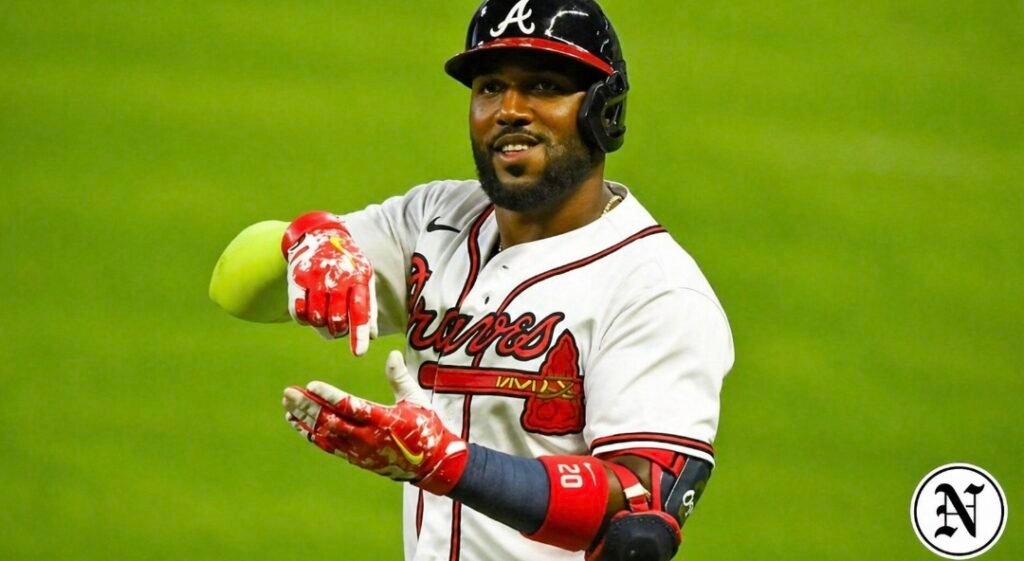
On February 8, 2026 — then formalized around February 16 — Marcell Ozuna signed a one-year deal with the Pittsburgh Pirates. The contract was worth $10.5 to $12 million depending on reporting source, with a mutual option for 2027 at $16 million and a $1.5 million buyout. The total guarantee reached roughly $12 million.
This is the definition of a prove-it deal, and it makes complete sense for both parties. Pittsburgh needed right-handed power badly. General Manager Ben Cherington had long emphasized acquiring impact bats without long-term financial risk. Ozuna, motivated by a down year and carrying something to prove, represents exactly that profile. If he rebounds to 25 or more home runs, the Pirates benefit immediately. If the decline continues, the contract is short enough that the financial exposure stays manageable.
PNC Park has traditionally played as a pitcher-friendly environment, particularly for right-handed power hitters. However, recent seasons have seen the ballpark play more neutral, which works in Ozuna’s favor. His role opens as the primary designated hitter, with Ryan O’Hearn shifting between corner outfield and DH depending on matchups.
What This Means for Atlanta’s 2026 Championship Window
The Braves’ competitive window remains wide open through at least 2028. Ronald Acuña Jr., Matt Olson, Ozzie Albies, and Spencer Strider anchor a core that any organization in baseball would envy. Moving on from Ozuna creates payroll breathing room — potentially $8 to $10 million in mid-season flexibility — that matters most if Atlanta pursues a front-line starting pitcher at the trade deadline to complement Chris Sale.
What Ozuna provided that cannot simply be replaced is proven postseason right-handed power. His presence forced opposing managers to make pitching adjustments in late-game situations. That kind of lineup balance has real strategic value, even in a year when his counting stats declined. Whoever the Braves deploy at DH in 2026 will need to approximate that production for the lineup to function at its highest level.
The early internal candidates — Baldwin, Murphy rotating through — represent depth rather than difference-making. If Atlanta cannot solve the DH question internally, the trade market or a midseason free agent signing becomes the likely path. The Braves have demonstrated willingness to make exactly those kinds of midseason additions, having reacquired Adam Duvall in 2021 and Jorge Soler in 2024.
The Bigger Lesson About How Baseball Media Works
The Braves Marcell Ozuna waiver candidate story teaches something worth internalizing. Baseball analysis in the digital era moves at a pace that frequently outstrips the facts on the ground. A plausible argument — “This expensive veteran is declining and his roster fit is questionable” — gets processed through the content machine and emerges looking like confirmed reporting.
Fans deserve better than that. And honestly, the underlying analysis is not wrong. Ozuna’s 2025 did raise legitimate questions about value, roster construction, and organizational direction. Those are worth examining seriously. The problem is when could becomes will, and when candidate becomes confirmed move.
The actual outcome was orderly, respectful, and strategically sound. Ozuna played out his contract, went through normal free agency, landed a deal that gives him a genuine shot at a meaningful bounce-back season, and left Atlanta without drama. That is a good story. It just does not generate as many clicks as “Braves Consider Waiving Ozuna.”
READ MORE: DeCarlo Griner: The Quiet Strength Behind Brittney Griner’s Rise
Conclusion: The Bear Finds a New Home, Atlanta Moves Forward
Marcell Ozuna’s six years in Atlanta produced some of the most memorable offensive moments in Braves history. Back-to-back elite seasons in 2023 and 2024 alone would justify his tenure. The 2025 down year, driven largely by a hip injury that limited his mechanical foundation, does not rewrite that legacy.
He was never waived. He was never designated for assignment. He played through the season, fulfilled his contractual obligation, and transitioned to Pittsburgh with his reputation and relationships intact. The Braves handled it with the organizational discipline that has defined Anthopoulos’s tenure. And Ozuna, at 35, gets a motivated fresh start with a franchise that genuinely needs what he can provide.
The waiver candidate narrative was analysis masquerading as news. The real story was simpler and, in its own way, more human: a great hitter had a rough year, his team moved on through normal baseball processes, and a new chapter opened somewhere else.
Pittsburgh gets a motivated veteran with something to prove. Atlanta gets roster and financial flexibility. Ozuna gets another shot. That is how it is supposed to work.
Frequently Asked Questions
Was Marcell Ozuna actually placed on waivers by the Braves?
No. The Atlanta Braves never officially placed Ozuna on waivers at any point during the 2025 season. He completed his contract, entered free agency naturally after the season ended, and signed with Pittsburgh. The waiver candidate label reflected media speculation, not an organizational decision.
Why did analysts call Ozuna a waiver candidate in the first place?
His 2025 production dipped significantly — finishing with a .741 OPS and 21 home runs after back-to-back elite seasons. Combined with his $16 million salary and limited defensive utility as a DH-only player, analysts argued Atlanta had financial and roster construction incentives to explore moving on. The logic was sound. The transaction never happened.
What were Ozuna’s best seasons with Atlanta?
The 2023 and 2024 campaigns were exceptional. Over those two seasons, he hit a combined .289/.364/.552 with a 148 wRC+, one of the top marks in baseball. He hit 39 homers in one season and 40 in the other, establishing himself as one of the most dangerous right-handed bats in the National League.
Where did Ozuna sign after leaving Atlanta?
He signed a one-year deal with the Pittsburgh Pirates on February 8 to 16, 2026, worth approximately $12 million in guarantees. The contract includes a mutual 2027 option at $16 million with a $1.5 million buyout, structured as a prove-it deal that incentivizes a strong bounce-back season.
How does losing Ozuna affect Atlanta’s 2026 roster?
The Braves gain DH flexibility and payroll breathing room — potentially $8 to $10 million usable toward midseason trade acquisitions. The challenge is replacing proven right-handed lineup protection. Internal candidates like Drake Baldwin and catcher Sean Murphy can fill partial DH roles, but neither offers the same power ceiling Ozuna provided in his peak.
Could the Braves have actually claimed salary relief through waivers?
No. The luxury tax calculation counts released player salaries as active payroll, meaning the Braves would have gained no competitive balance tax relief by waiving Ozuna mid-contract. Any team claiming him would assume his remaining salary — an unlikely scenario given the contract size relative to his 2025 production level.
What does Ozuna’s deal mean for the Pittsburgh Pirates in 2026?
Pittsburgh adds a motivated veteran who needs one strong season to restore his market value. At $12 million on a one-year deal, the financial risk is manageable even if Ozuna struggles. If he rebounds to 25 or more home runs, he meaningfully upgrades a lineup that was thin on right-handed power and positions the Pirates as a more credible contender in the NL Central.
Is Ozuna’s career in decline or can he still be an impact hitter?
The honest answer is somewhere in the middle. His 2025 hip injury created specific, identifiable mechanical problems that a healthy offseason can address. A 120 to 125 wRC+ bounce-back is realistic for a healthy Ozuna at 35, which would make him a quality run-producer even if his peak power production does not fully return. Age-related decline for DH-only players tends to accelerate, but one injury-affected season does not confirm a permanent trajectory.
READ MORE: https://newsobuzz.com/